


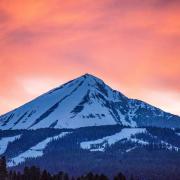
Big Sky, Montana is an outdoor lover's paradise — with more than a lifetime's worth of hiking, skiing, rafting, biking, fishing, and peak bagging right in your backyard. But Big Sky Country extends well beyond the resort corridor, and one of the most rewarding day trips you can make is the run south to West Yellowstone. The drive alone is worth the tank of gas.
The Drive at a Glance
West Yellowstone — often called simply "West" by locals — is one of Big Sky's closest neighbors. Head south on US Highway 191 and follow it for approximately 51 miles. The highway traces the Gallatin River as it winds between the Madison and Gallatin mountain ranges, cuts through the northwestern corner of Yellowstone National Park, and deposits you right at the edge of one of America's most beloved gateway towns. No turns, no navigation stress — just one spectacular road.
The Route: What to Expect Along the Way
From Big Sky south into Gallatin Canyon (~0–25 miles): Leaving Big Sky, the highway narrows into Gallatin Canyon, a serpentine two-lane road flanked by sheer canyon walls, dense lodgepole pine, and the rushing Gallatin River. This stretch is genuinely beautiful and full of pull-offs that invite you to stop and breathe it in. Keep your eyes on the cliffsides for bighorn sheep — in summer they retreat to higher ledges, but they're often visible from the road. Black bears, moose, and elk also frequent this corridor. Several developed pull-outs offer river access for a quick fishing cast or a trailhead stretch. Notable access points include the Lava Lake Trailhead, Deer Creek Trail, and Specimen Creek.
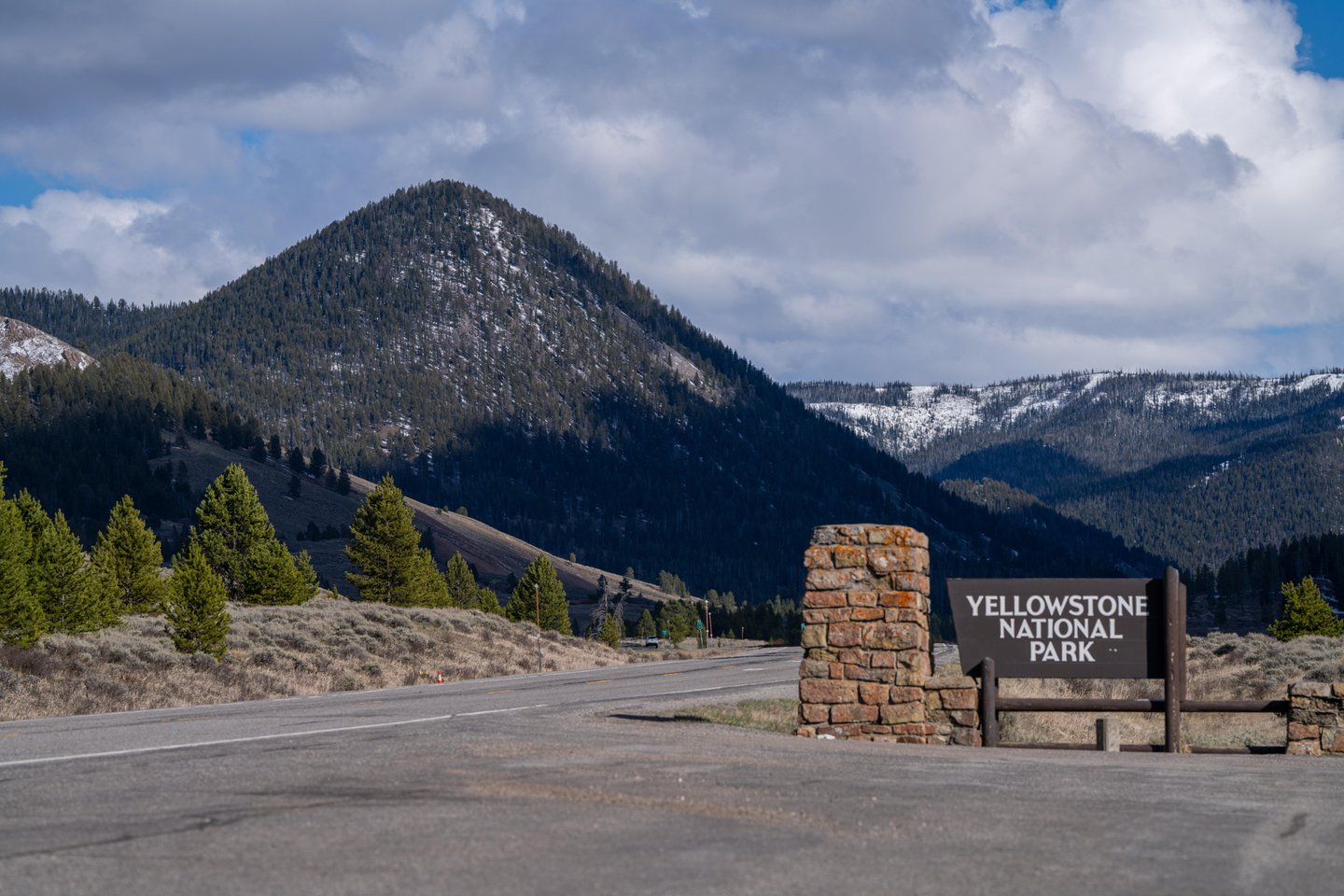
Entering Yellowstone National Park (~25–40 miles): About halfway into the drive, you'll cross into the northwestern section of Yellowstone National Park — and you'll know it immediately by the scenery opening up. Importantly, there is no National Park Service entrance gate on this stretch of US-191. You do not need to pay the park entrance fee simply to drive through on Highway 191. The road still passes through federally protected land, however, so park rules fully apply: the speed limit drops to 55 mph, and stopping on the roadway is prohibited except at designated pull-outs.
As you enter the park, wildlife sightings become more frequent. This section of 191 runs through a prime corridor for grizzly and black bears, elk, and bison — slow down and stay alert at all times.
Madison Junction to West Yellowstone (~40–51 miles): After reconnecting briefly with the main park road near Madison Junction, the highway turns west and follows the Madison River for about 12 miles of spectacular riparian scenery — dramatic cliffs, wide river bends, and some of the richest wildlife viewing habitat in the Greater Yellowstone Ecosystem. You'll pass the Highway 287 and Hebgen Lake turnoff just before the road straightens out. Then you're in West Yellowstone. Watch for bison on this last stretch — they wander into the road with remarkable indifference to traffic.
Road Conditions & Seasonal Tips
Summer (June–September): This is peak season, and the road is fully open and in good condition. That said, US-191 through Gallatin Canyon is a busy, two-lane highway. During summer weekends and peak holiday periods, traffic can back up significantly, especially near Big Sky and near the park boundary. Leave early to avoid the worst congestion and to reach West Yellowstone before park crowds build.
2026 Heads-Up: Park Construction Delays: If you plan to continue into Yellowstone from the West Entrance, be prepared for construction-related delays in 2026. Road improvement projects are underway in various areas of the park, and delays are possible during peak summer months. Check the NPS Yellowstone road status page for current conditions before you go.
Fall (October): The West Entrance to Yellowstone closes to regular vehicle traffic on October 31, 2026. The highway itself stays open, but plan your timing accordingly if a West Yellowstone visit is part of the trip.
Winter (November–April): US-191 remains open year-round, but winter driving demands preparation. Gallatin Canyon can see ice, snow, and wind-blown drifts with little warning. Check the Montana Department of Transportation road condition reports before heading out. Use snow tires or carry chains, and pack layers — even if the forecast looks clear. For tips on safe winter travel in the region, see our guide to safe winter driving in Big Sky Country.
Wildlife: Rules, Etiquette & Your Responsibility
This corridor ranks among the most important wildlife highways in the Greater Yellowstone Ecosystem. Grizzly bears, black bears, moose, elk, bison, bighorn sheep, and wolves all move through here regularly. That's a privilege — and it comes with responsibilities.
- The official NPS minimum distances: - 100 yards (91 m) from bears, wolves, and cougars - 25 yards (23 m) from all other wildlife, including bison and elk - Approaching any animal close enough to disturb or displace it is illegal in Yellowstone, regardless of the distance
- Pull-off etiquette: Pull completely off the road before stopping—do not park on the highway shoulder or block traffic. Turn on your hazard lights when slowing for wildlife. If a "wildlife jam" forms, be patient. It may take you an extra 30–60 minutes to drive a few miles. That's part of the experience — embrace it. Do not honk your horn to move animals along
- A few critical rules: - Never feed wildlife. Not bears, not bison, not the squirrel at the pull-out. Animals conditioned to human food can become aggressive and often have to be euthanized as a result.
- Never approach a bison for a photo. Bison are the most dangerous animals in the park and have injured more people than any other species. If a bison is walking toward you, move away immediately.
Arriving in West Yellowstone: What to Know
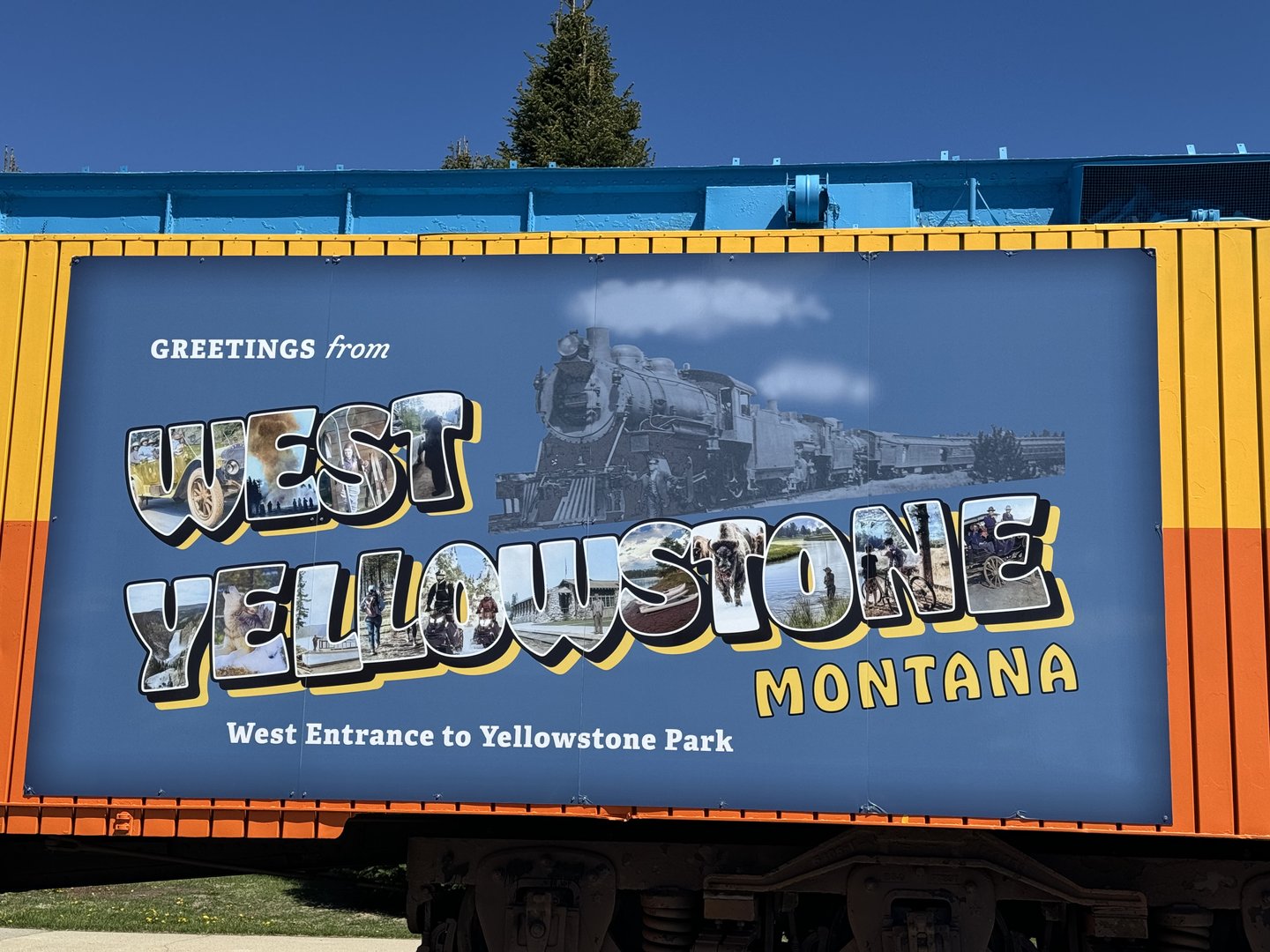
The West Entrance to Yellowstone National Park is located at the edge of town and is open to vehicle traffic from April 17 through October 31, 2026. In winter, it's the gateway for groomed snowmobile trails and guided Snowcoach tours into an eerily beautiful, crowd-free park.
2026 Entrance Fees (7-day pass): - Private vehicle: $35 (covers all passengers) - Motorcycle: $30 - Individual (walk-in/bike): $20 per person (age 16+) - Note for international visitors: A new $100 nonresident surcharge per person (age 16+) applies in 2026, in addition to the standard fee. Annual pass holders are exempt.
What to do in West Yellowstone: West Yellowstone is a compact, walkable town with a surprising amount to offer beyond the park gates. In summer, highlights include world-class fly-fishing on the Madison River, the grizzly & wolf Discovery Center, the Museum of Yellowstone, and a lively town center with great food and local shops. In winter, West Yellowstone transforms into the snowmobiling capital of the region — with direct access into the park and hundreds of miles of groomed trails. Cross-country skiing and Snowcoach tours round out the season. See our daytrip guide to West Yellowstone for more details on what to see and do.
Quick Tips for the Drive
-
Fill up your gas tank before you leave Big Sky.
-
Download offline maps. Cell service drops out in Gallatin Canyon and inside the park.
-
Bring binoculars. Wildlife viewing is far better with glass — and keeps you at a safe, legal distance.
-
Start early. Early-morning light is stunning, roads are quieter, and wildlife is most active at dawn and dusk.
-
Pack layers. Even in July, temperatures near the park can swing dramatically. Afternoon thunderstorms are common.
-
Give yourself the day. With pull-offs, wildlife, and everything West Yellowstone offers, rushing this route is a waste. Build in a full day.
Between the jaw-dropping canyon drive, the no-gate passage through Yellowstone's northwest corner, and all that West Yellowstone has to offer, this 51-mile stretch of US-191 stands as one of the great American road trips — and it starts right in your Big Sky backyard.