


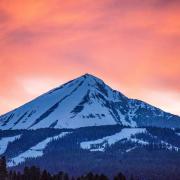
There's a moment, somewhere between the trailhead and the treeline, when the hillside just opens up — and suddenly, the whole mountain is in bloom. That's wildflower season in Big Sky, Montana, and it's one of the most breathtaking displays of natural color you'll find anywhere in the American West.
Big Sky is home to an extraordinary number of native wildflower species. According to Montana State University botanist Matt Lavin, nearly 300 species of wildflowers grow in Beehive Basin alone between June and August. Whether you're out for a leisurely stroll or a full-day alpine adventure, the trails of Big Sky will reward you with color at every turn.
Peak bloom typically runs late spring through mid-summer (June–July), when our hillsides transform into living galleries of brilliant color. Bring your camera. You're going to need it.
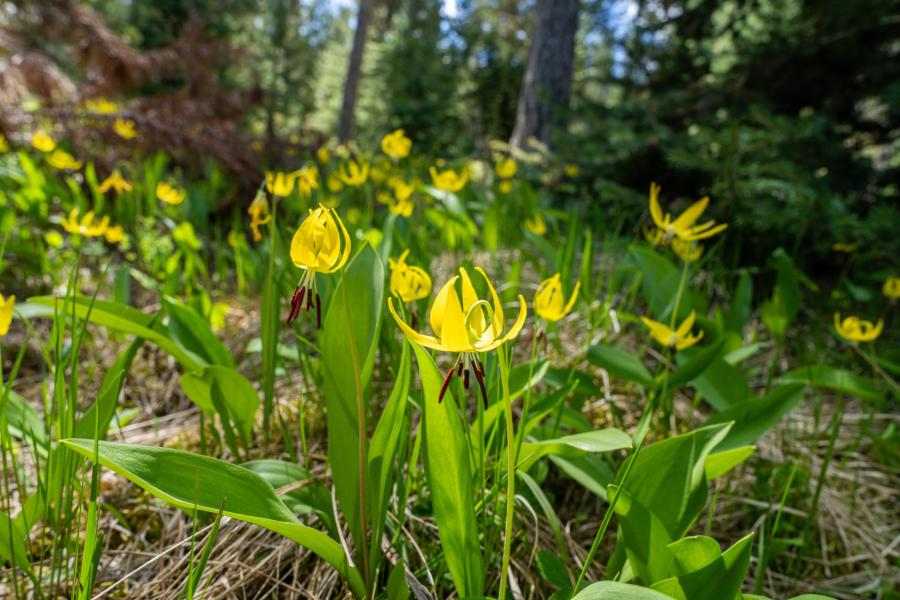
The Colors of a Montana Summer
From the deep purples of lupine to the fiery reds of Indian paintbrush, Big Sky's wildflower palette spans the full spectrum. These aren't just pretty faces; they're a reminder of Montana's wild heart and one of the many reasons we love spending time outdoors.
6 Wildflowers to Spot on the Trail
Lupine
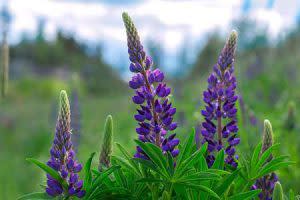
Lupine | Pixabay Image
When to see it: May – August | Where: Meadows throughout the area, including Beehive Basin and the Uplands Trail
One of the most iconic wildflowers in the American West, lupine's bold lavender-blue spikes paint meadows across Big Sky from late spring through August. There are at least 10 species of lupine in Montana — and while they're beautiful to look at, note that the plants (especially the seeds) can be toxic if ingested.
Mountain Harebell
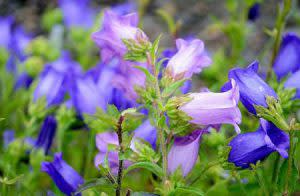
Mountain Harebells | Pixabay Image
When to see it: Late June – August | Where: Rocky slopes and open meadows at higher elevations
Arguably the most delicate bloom on the mountain, the harebell's nodding, bell-shaped flowers sway at the slightest breeze. Its electric blue petals are easy to miss among the rocks, making them all the more rewarding when you do spot them.
Indian Paintbrush
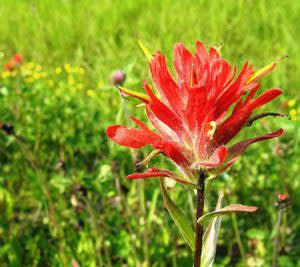
Indian Paintbrush | Pixabay Image
When to see it: Late June – September | Where: Widespread — you'll spot it at nearly every elevation
With perhaps 9 species found in Montana, Indian paintbrush ranges from pale yellow to scarlet red to deep fuchsia. It's one of the most widespread wildflowers in the area, and one of the most photographed.
Glacier Lily

Glacier Lily | Jonathan Stone
When to see it: Early season | Where: Moist, shaded habitats at all elevations; follows the retreating snowline
Often among the very first blooms of the season, glacier lilies chase the melting snow upslope in a remarkable natural display. Also known as the yellow avalanche lily or dogtooth fawn lily, its flowers and seedpods are edible — and a well-known favorite food of emerging bears.
Asters
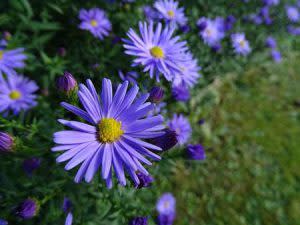
Aster | Pixabay Image
When to see it: Mid-summer through early fall | Where: Open meadows and trailsides throughout the area
The star-shaped blooms of asters signal that summer is fully underway. Look for them dotting meadows and trailsides from mid-July through early fall — a vital late-season nectar source for native bees and pollinators.
Arrowleaf Balsamroot
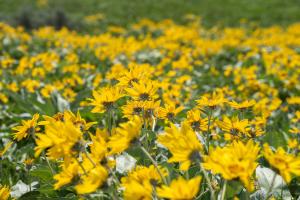
When to see it: June – July | Where: Sun-exposed slopes; look for it along the Uplands and Black Diamond Trail in early summer
Few sights signal the arrival of summer quite like the sweeping yellow carpets of arrowleaf balsamroot blanketing the hillsides. It's one of the first bold splashes of color you'll see on south-facing slopes when the season turns.
Keep an eye out for even more gems on the trail: elephant's head, wild iris, bluebells, wild rose, Jacob's ladder, sticky geranium, larkspur, pasque flower, and dozens more. Carrying a local wildflower guidebook turns the whole adventure into a treasure hunt.
Want to go deeper? Montana.Plant-Life.org is a great online reference. Or pick up a physical copy of Wildflowers of Montana by Donald Anthony Schiemann from a local shop in town.
Where to Find Wildflowers: Top Trails in Big Sky
Not sure where to start your wildflower hunt? Here's our go-to list of Big Sky hikes that deliver stunning blooms throughout the season:
- Beehive Basin: Famous for its stunning alpine lake and incredible wildflower meadows.
- Cinnamon Mountain: Offers sweeping views and beautiful blooms.
- Bear Basin: A more secluded feel with plenty of natural beauty.
- Storm Castle Peak: A more challenging hike with rewarding vistas and diverse flora.
- Windy Pass: True to its name, but often rich with high-alpine wildflowers.
- Uplands Trail: An excellent option for a more accessible stroll close to town center with plenty to see.
Trail Spotlight: Beehive Basin
Arguably Big Sky's crown jewel for wildflower viewing, Beehive Basin is a 6.9-mile round-trip hike with 1,630 feet of elevation gain, leading through wildflower-strewn meadows to a stunning alpine lake in the Lee Metcalf Wilderness. In June, look for arrowleaf balsamroot, larkspur, spring beauties, and delicate bluebells. By midsummer, the trail blazes with yellow columbine and arnica, purple lupine, pink geranium, and red paintbrush. Go early — the parking lot fills fast on summer mornings.
Trail Spotlight: Uplands Trail
For a wildflower fix without the all-day commitment, Uplands Trail delivers. At just 2.2 miles round trip, this loop starts minutes from Big Sky's Town Center and offers wide-angle views of Lone Mountain alongside meadows bursting with yellow balsamroot in early summer. One of the most accessible wildflower walks in the area.
Don't Miss: Big Sky Wildflower Festival — July 7–11, 2026
Wildflower enthusiasts won't want to miss the Big Sky Wildflower Festival, returning July 7–11, 2026 at Crail Gardens and venues throughout Big Sky, MT. Hosted by Grow Wild, this week-long celebration features:
-
Expert-led educational talks on native plants and ecology
-
Creative workshops with local artists and business owners
-
Guided trail experiences through Big Sky's most spectacular wildflower terrain
-
Hands-on activities for all ages and experience levels
Check the Grow Wild events page for the full 2026 schedule.
Tips for Your Wildflower Adventure
Before you head out, a few things to keep in mind:
-
Go early. Popular trailheads like Beehive Basin fill up fast. An early start means better parking and more solitude.
-
Stay on the trail. Trampling off-trail damages the very blooms you came to see and the habitat that supports them.
-
Take only photos. Never pick wildflowers — the blooms turn into seeds that keep the ecosystem healthy for future visitors.
-
Be bear aware. Big Sky is bear country. Carry bear spray, make noise on the trail, and hike in groups.
-
Check conditions. Mountain weather changes fast. Bring extra layers and check trail conditions before you go.
For a full overview of Big Sky's trail network, visit our hiking page.
When you're here this summer, make sure to carve out some time for the trails during wildflower season and watch our hillsides come alive with natural color. It's truly one of the most spectacular — and most under-celebrated — reasons to love Big Sky.
P.S. Captured something stunning out there? Share your wildflower shots on social media with #VisitBigSky — we'd love to see what you find!