



On August 17, 1959, at 11:37 p.m., a magnitude 7.3 earthquake — the strongest ever recorded in the Rocky Mountains — struck the Madison River canyon just outside Yellowstone National Park. The shockwave triggered a catastrophic landslide on Sheep Mountain, sending approximately 80 million tons of rock and debris hurtling down the canyon wall at over 100 miles per hour. In less than a minute, the Madison River was completely blocked. Behind that natural dam, floodwaters rose to engulf trees, campgrounds, and roads, forming what is now Earthquake Lake.
The disaster claimed 28 lives — 19 victims were never recovered and remain entombed beneath the slide debris to this day. Approximately 250 people were trapped in the canyon that night and evacuated over the following days as the water continued to rise. The earthquake's force reached far beyond Montana: it was felt as far away as Salt Lake City, temporarily altered geysers inside Yellowstone National Park, and affected water well levels as far away as Hawaii and Puerto Rico.
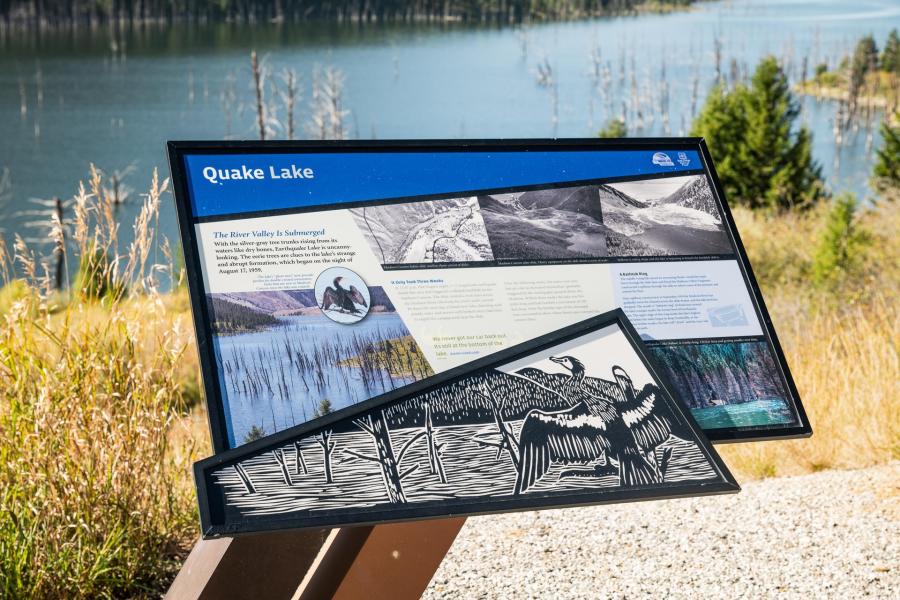
Today, the haunting "ghost forest" of skeletal trees still rises from Quake Lake's surface — a silent, striking reminder of the valley that was swallowed in a single night.
The History of Earthquake Lake
Whether you're a history buff, an outdoor adventurer, or simply a curious traveler, Earthquake Lake has something for you.
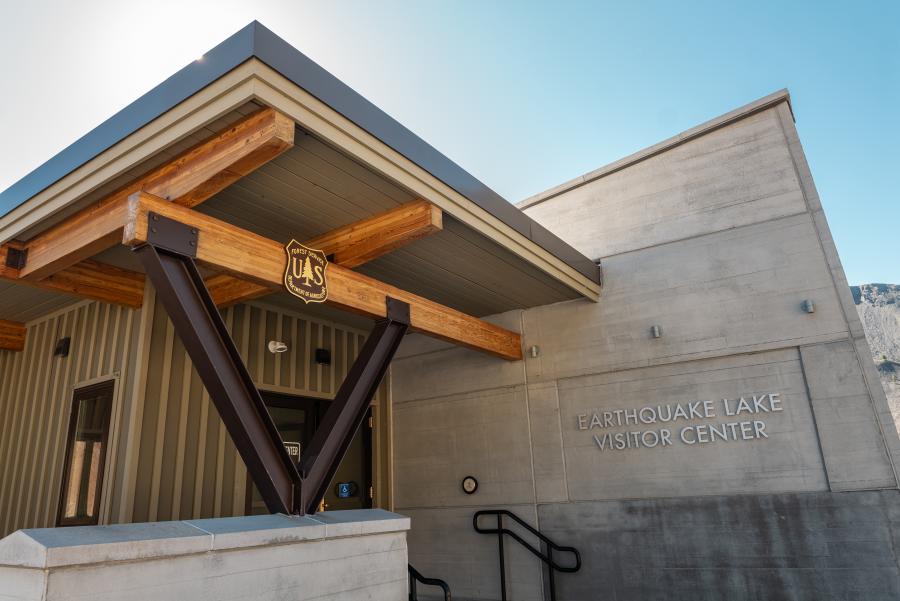
Explore the Earthquake Lake Visitor Center
Operated by the U.S. Forest Service since 1967, the Earthquake Lake Visitor Center sits directly atop the landslide debris and welcomes more than 50,000 visitors every year. Step inside to explore:
Interpretive exhibits on plate tectonics, earthquake science, and the events of that fateful night
A working seismograph — watch the earth's micro-movements in real time
Scheduled movies and ranger talks in the on-site observatory
A Yellowstone Forever Park Store with books, maps, and educational souvenirs
Outside, a short walking path leads to the Memorial Boulder, engraved with the names of the 28 people who lost their lives. Additional overlook trails offer sweeping views of the massive landslide scarp, still clearly visible on the mountainside across the lake. Pick up a free Visitor Guide on your way out to explore additional points of interest by car — including the old Hilgard Lodge site and a section of highway destroyed by the original slide.
Admission is free. The Visitor Center is open daily from Memorial Day weekend through September 15, 10 a.m. to 5 p.m.
Fish the Ghost Forest
Quake Lake stretches six miles long and reaches a maximum depth of 125 feet. The submerged trees that give the lake its eerie beauty also create exceptional fish habitat — making this a favorite spot for fly-fishing enthusiasts. You'll find brown trout and rainbow trout in these waters, with late spring through early summer and again in fall being ideal times to cast a line. A boat ramp located about halfway down the lake from the highway offers easy access for motorboats and canoes.
A Montana fishing license is required for all anglers.
Paddle Through History
Kayaking and canoeing among the skeletal trees rising from Quake Lake's surface is an experience that's equal parts beautiful and humbling. Plan your paddle for the morning hours — like many Montana lakes, Quake Lake is known for strong and unpredictable afternoon winds. Keep an eye out for submerged timber just below the surface, which can snag inflatable vessels.
Photography & Wildlife Watching
Few spots in southwest Montana offer more dramatic photography than Earthquake Lake. The panoramic view of the landslide scarp, the lake, and the ghost forest is truly one of a kind — and the light changes beautifully throughout the day. Keep your eyes peeled for bighorn sheep, frequently spotted near the Visitor Center along Highway 287.
Getting There: From Big Sky, head south on Highway 191 toward West Yellowstone. From West Yellowstone, take Highway 191 north for 8 miles, then turn left onto Highway 287. Continue for 17 miles — the Visitor Center will be on your right. Total drive time from Big Sky is approximately one hour.
When to Go: The Visitor Center is open Memorial Day weekend through September 15, daily from 10 a.m. to 5 p.m. The lake and surrounding landscape are accessible year-round, though services are only available during the summer season. Always check road conditions on Highway 287 before your trip, as the route can be subject to rockfall activity.
💡 Day Trip Tip: Pair Earthquake Lake with a stop in West Yellowstone for a full day of history, scenery, and adventure. You can also add a loop through Yellowstone National Park for an unforgettable Southwest Montana experience.


